
Where the generator isn't a backup.
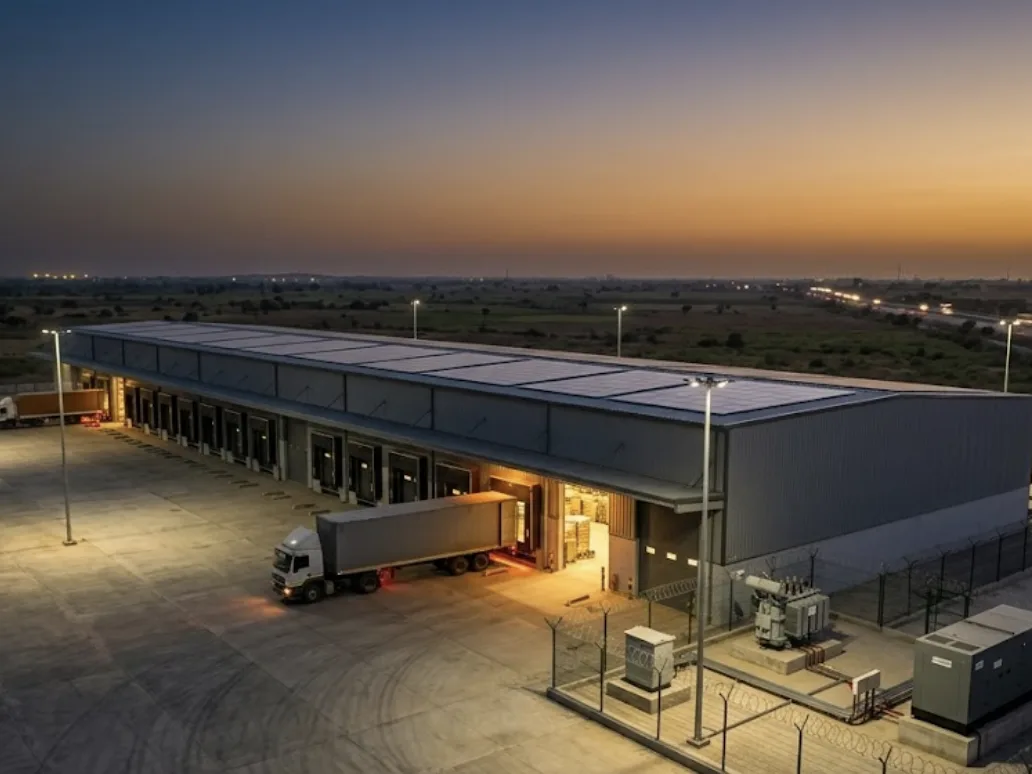
Hubs are built where land is cheap, which is usually where the grid is weakest. Diesel becomes a running cost, not a contingency.
The sector problem
High connected load, long generator hours and a fuel bill large enough to be a line item in its own right. It is also the one sector where diesel consumption is material enough that the Scope 1 number cannot be waved through on a manufacturer's curve.
Where to start
Meter
Clears the barRuntime is high enough that direct fuel sensing pays for itself, and high enough that a measured Scope 1 baseline is worth having.
Attest
Underneath itService verification on the assets whose failure stops the network, with the deferred re-check catching repairs that did not hold.
Sustain
Core fitHubs sit outside city limits, which is precisely the coverage gap the field network exists to close.
Evidence
Logistics is where the Meter argument is strongest and where we have least to show. We would rather say so than borrow a BFSI result and call it a sector case.